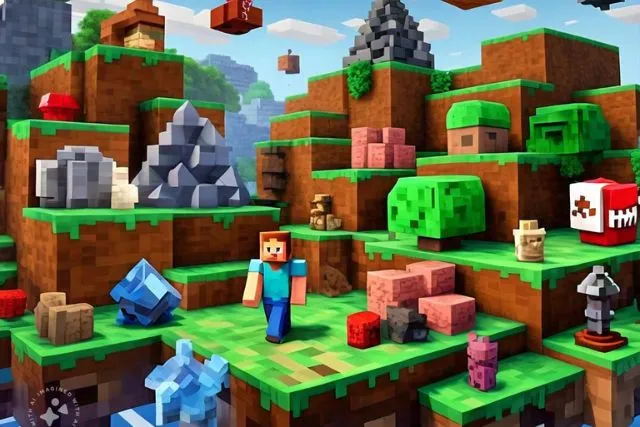
Minecraft (2009) Game Icons Banners, no one could have predicted that a blocky indie game would evolve into one of the most recognizable brands in gaming history. While gameplay mechanics like mining, crafting, and survival deserve most of the credit, the game’s icons and banners quietly played a massive role in building its visual identity. These design elements helped Minecraft stand out in a rapidly growing gaming market and made it instantly recognizable across platforms.
The phrase minecraft (2009) game icons banners refers to the early visual symbols, logos, menu icons, and in-game banner aesthetics that defined the game’s look during its formative years. Unlike modern AAA games that rely on flashy graphics, Minecraft leaned into simplicity, consistency, and charm—and that decision paid off in a big way.
In this article, we’ll explore how Minecraft’s early icons and banners were designed, why they worked so well, and how they influenced both players and the wider gaming industry. Whether you’re a designer, a Minecraft fan, or just curious about game branding, this deep dive has you covered.
The Origins of Minecraft (2009) Game Icons Banners
Minecraft’s visual identity in 2009 was born out of necessity rather than luxury. Markus “Notch” Persson was developing the game largely on his own, with limited resources and a clear focus on gameplay rather than polished visuals. This constraint shaped the earliest minecraft (2009) game icons banners, making them simple, functional, and memorable.
The original Minecraft (2009) Game Icons Banners was minimalistic, often featuring earthy tones, pixelated textures, and block-based imagery. These visuals reflected the core concept of the game: a world built entirely from blocks. Instead of trying to appear realistic, Minecraft embraced its pixelated aesthetic, which ironically made it more distinctive than many visually complex games of the same era.
This early design philosophy set the tone for everything that followed. Minecraft (2009) Game Icons Banners, menu elements, and early banner concepts weren’t overloaded with detail. They communicated purpose instantly, which made the game accessible even to players who had never touched a sandbox title before.
Early Minecraft (2009) Game Icons Banners: Simplicity That Worked
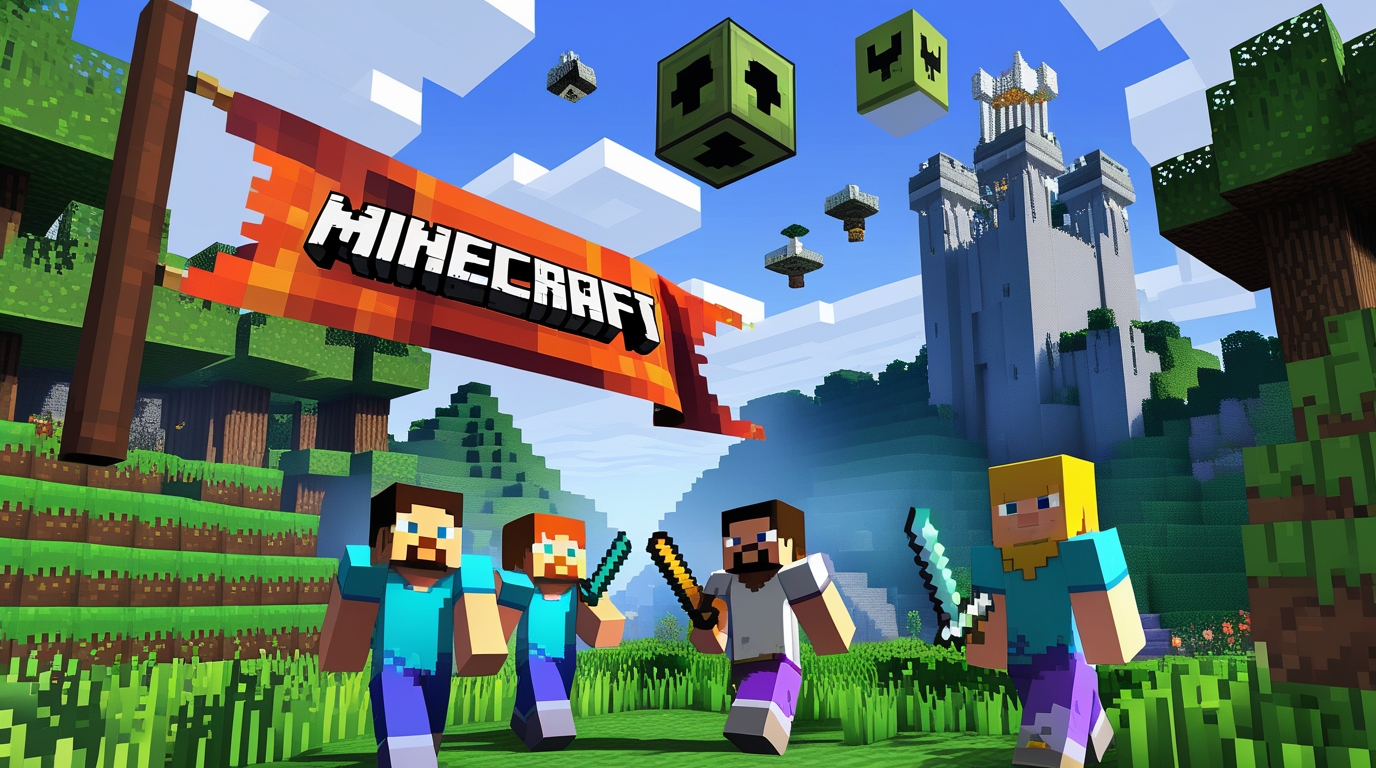
The Minecraft (2009) Game Icons Banners are a masterclass in how less can truly be more. Early icons were designed with clarity as the top priority. Items like blocks, tools, and menus used bold shapes, limited color palettes, and pixel-perfect edges that aligned with the game’s overall art style.
What made these icons special was their consistency. Every icon felt like it belonged in the same universe. Whether you were looking at a dirt block, a crafting table, or a menu button, the design language stayed uniform. This consistency helped players quickly understand game mechanics without needing tutorials or explanations.
From a branding perspective, these icons also helped Minecraft stand out on desktops, launchers, and early websites. Even at small sizes, the icons were instantly recognizable. That recognizability is one of the key reasons Minecraft gained traction so quickly among early adopters.
The Role of Banners in Early Minecraft Aesthetics
While banners as in-game items were introduced later, the concept of banners in the minecraft (2009) game icons banners ecosystem existed from the beginning in a broader sense. Early promotional banners, website headers, and launcher graphics played a crucial role in shaping how players perceived the game.
These banners often featured blocky landscapes, pixelated fonts, and muted color schemes that matched the in-game world. They didn’t try to oversell the experience. Instead, they gave players a clear, honest preview of what Minecraft was about—creativity, exploration, and freedom.
This honest approach built trust. Players weren’t misled by cinematic trailers or overly polished visuals. What you saw in the banners was what you got in the game, and that authenticity became a core part of Minecraft’s brand identity.
Typography and Fonts Used in Early Minecraft Banners
One of the most underrated aspects of minecraft (2009) game icons banners is typography. The iconic Minecraft logo font, with its chunky, block-like letters and cracked stone texture, perfectly captured the game’s theme. It looked handcrafted, rugged, and playful all at once.
Early banners and promotional images used fonts that echoed the pixelated nature of the game world. These fonts weren’t just decorative; they reinforced the idea that everything in Minecraft was built from blocks. Even the letters felt like they could exist inside the game.
This strong typographic identity helped Minecraft achieve instant brand recognition. You didn’t need to see the full logo—just a few blocky letters were enough to know exactly what game you were looking at.
Color Palettes and Visual Consistency
Color choice played a massive role in the success of minecraft (2009) game icons banners. Early designs leaned heavily on earthy tones like browns, greens, and grays, reflecting dirt, grass, stone, and wood. These colors grounded the game in a natural, survival-based world.
The limited color palette wasn’t a limitation—it was a strength. By avoiding overly bright or saturated colors, Minecraft created a calm and immersive visual experience. Icons and banners felt cohesive, not chaotic, which made long play sessions more enjoyable.
This consistency also helped Minecraft age gracefully. Even today, when you look back at early banners and icons, they don’t feel outdated. They feel timeless, largely because the designers resisted trends and focused on a clear visual identity.
Community Influence on Minecraft Icons and Banners
One fascinating aspect of minecraft (2009) game icons banners is how quickly the community became involved. Early players began creating custom icons, fan banners, and modified visuals that expanded the game’s visual ecosystem beyond its original scope.
Mojang paid close attention to this community creativity. Many ideas that started as fan-made designs later influenced official visuals, especially as the game evolved. This open relationship between developers and players strengthened Minecraft’s identity and made fans feel invested in the game’s future.
Community-created banners and icons also helped spread Minecraft across forums, social media, and early YouTube channels. These visuals became free marketing tools, amplifying the game’s reach without traditional advertising.
How Early Icons and Banners Supported Gameplay
The minecraft (2009) game icons banners weren’t just about looks—they actively supported gameplay. Clear icons made crafting intuitive. Recognizable symbols reduced confusion. Players could focus on creativity instead of struggling with interfaces.
Early banners and menus also helped set expectations. They communicated that Minecraft was an open-ended experience with no strict rules. This sense of freedom encouraged experimentation, which became one of the game’s defining traits.
In many ways, the visuals acted as silent teachers. Without lengthy tutorials, players learned by observing icons, layouts, and symbols. That intuitive design is a big reason Minecraft appealed to both kids and adults alike.
Evolution of Minecraft (2009) Game Icons Banners Over Time
As Minecraft grew, its icons and banners evolved—but they never lost their original DNA. Modern designs are more polished, higher resolution, and optimized for multiple platforms, yet they still reflect the same blocky charm introduced in 2009.
Looking back at minecraft (2009) game icons banners makes it clear how strong the foundation was. Because the early visuals were so well thought out, Mojang didn’t need to reinvent the brand. They simply refined it.
This gradual evolution kept longtime fans comfortable while welcoming new players. It’s a delicate balance that many games fail to achieve, but Minecraft managed it remarkably well.
Why Minecraft’s 2009 Visual Identity Still Matters Today
Even today, the influence of minecraft (2009) game icons banners can be seen across the gaming industry. Many indie games now embrace minimalistic icons, pixel art, and honest branding inspired by Minecraft’s success.
The early visuals proved that you don’t need cutting-edge graphics to build a powerful brand. What you need is consistency, authenticity, and a clear understanding of your game’s core experience.
For designers, developers, and marketers, Minecraft’s early icons and banners remain a valuable case study. They show how thoughtful visual design can elevate a simple idea into a global phenomenon.
Final Thoughts on Minecraft (2009) Game Icons Banners
The story of minecraft (2009) game icons banners is a story of smart design choices, creative limitations, and community-driven growth. These visuals weren’t flashy or expensive, but they were purposeful—and that made all the difference.
From humble beginnings to worldwide recognition, Minecraft (2009) Game Icons Banners laid the groundwork for one of the most successful games ever made. They didn’t just represent the game; they defined it.
If there’s one lesson to take away, it’s this: great design isn’t about complexity—it’s about clarity. And Minecraft proved that back in 2009, one block at a time.